HOME  SM
  View Cart  Your Shopping Cart
           Main Page       Alphabetical Index of Knitting Kits     Frequent Buyers' Club   What's New  Customer Service  Contact Us  Site Map


Knitting Kits
Baby Items
Critter Kits
Hats
Lace Shawls
Mittens
Ponchos
Scarves
Small Projects
Socks, Slippers, Leggings
Sweaters for Adults
Sweaters for Children
Home Accessories
Variegated Yarn Kits

Alphabetical Index
to all Knitting Kits


Knitting Essentials
Morehouse Merino Yarn

2-Ply Yarn
2-Ply Variegated Yarn
2-Strand Yarn
3-Strand Yarn
3-Strand Variegated Yarn
Bulky Yarn
Bulky Variegated Yarn
Gator Yarn
Lace Yarn
Monet Lace Yarn
Variegated Lace Yarn

Yarn Color Samples

Crochet Hooks
Knitting Needles
Knitting Tools
Knitting Patterns

Just Looking & Browsing ..
BookShop
Breezy Lace
Cold Weather Gear
General Store
Knits for Kids


Shopping Information
Ordering Information
Gift Certificates

Other Information
Frequently Asked
  Questions

Wool Care Info

Need Help?
Knitting Tips
Help with Patterns

Errata


Customer Service
During business hours
you can reach us direct at:
845-758-3710 or, request
support, any hour, 24-7,
toll-free (leave message):
888-495-6565

Customer Service
at Farm: 845-758-3710
Mon-Fri, 10am-5pm

Our Mailing Address:
Morehouse Farm
141 Milan Hill Road,
Red Hook, NY 12571


       eMAIL

© 1999-2010 Copyright
Morehouse Farm Merino

Morehouse KnitTips

Knitting with variegated yarns


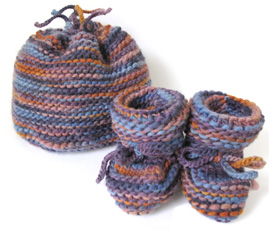
The uniqueness of hand painted variegated yarns poses a challenge to knitters: each skein might be slightly—and sometimes not so subtly—different. The skein may contain the same color scheme, but the amount of each color varies and sometimes the colors are darker or lighter. How do we knit them together so that the individual differences between skeins are not noticeable on the finished product?

Begin by winding the skeins into balls. It is easier to notice the subtle color differences in wound balls than on loose skeins.

Following are sample projects and how to knit them with variegated yarn:

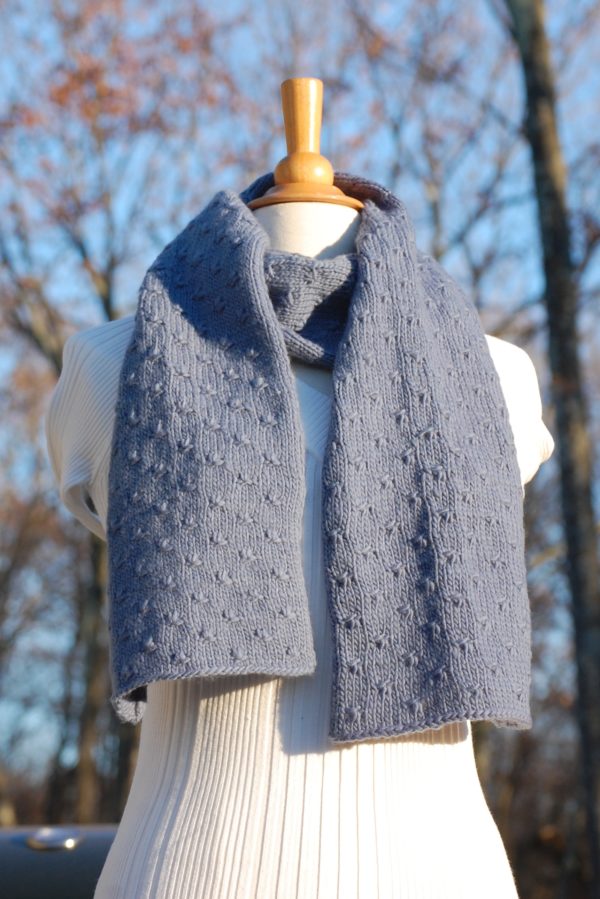
Lace scarf using 2 skeins of variegated yarn

Cast on with skein A and work 2 rows in pattern. Switch to skein B and work 2 rows in pattern (don’t break off yarn, just pull it up loosely at side of scarf whenever you are ready to resume with next color). Back to skein A and work 2 rows. Continue this way, switching skeins every 2 rows to end of scarf.

Lace shawl or scarf using 3 skeins of variegated yarn

Cast on with skein A and work 2 rows in pattern. Switch to skein B and work 2 rows in pattern. Back to skein A and work 2 rows. Continue this way, switching skeins every 2 rows, for about 20 to 30 rows (depending on width of rows), then break off skein A and substitute with skein C. witch between skeins B and C for about 20 to 30 rows, then break off skein B and re-introduce skein A and alternate between A and C for the next 20 to 30 rows. Then break off C and go back to skein B. Continue this way to end of scarf or shawl.

Lace shawl using 4 skeins of variegated yarn

Start with 2 skeins—A and B. Cast on and work 2 rows in pattern with skein A, switch to B and work 2 rows. Continue this way for approximately 40 rows. Break off skein A, and start with skein C and alternate every 2 rows between B and C. Continue for another 40 rows, then break off skein B and start with skein D. Alternate every 2 rows between C and D. Continue for 40 rows, break off skein C and re-introduce skein A. Alternate between A and D for about 40 rows, then break off D and re-introduce skein B, and so on. This way, each skein is introduced and worked together with another skein.

Mittens and hats using more than 1 skein of variegated yarn

Work with both skeins simultaneously and switch skeins every 2 rounds.

Sweater or cardigan

Here it gets a little trickier: divide the skeins into lighter and darker tones (or if one color is more dominant, set skeins aside with similar color dominance). Decide which tones you want to use for which part of the sweater. For example: you might want to use the lighter skeins for sleeves and collar. Keep the body of the sweater more or less uniform. If necessary, divide further for front and back of sweater. Set aside the skeins for the sleeves (about 25% of the entire amount of yarn).

Cast on with skein A for body of sweater, work 2 to 4 rows in pattern, switch to skein B and work 2 to 4 rows in pattern. Back to skein A and work 2 to 4 rows. Continue this way, switching skeins every 2 to 4 rows, for about 4 inches into body of sweater or cardigan. Then break off color A and use color C. Alternate between skeins B and C for the next 4 inches. Then, depending on how many skeins you have put aside for each side, add 4th skein or continue alternating between 3 skeins and use the next 3 skeins for other side of sweater.

Sleeves are worked alternating between 2 skeins, breaking off 1 skein after 20 to 30 rounds into sleeve and adding 3rd skein for next 20 to 30 rounds. For collar and/or borders, use whichever skein you have the most left over, so that you can complete entire collar or borders on cardigan without switching skeins.


If you have more questions,
or need some assistance
knitting with any of our patterns,
see >   Knitting Pattern Help


Other Morehouse KnitTips:

> How to wind a skein into a ball

> How to knit with more than one yarn color

> How to knit in the round

> How to pick up stitches around armhole

> Knitting with lace yarn

> Knitting with variegated yarn

> Pattern stitches

> Pattern abbreviations and what they mean

> Finishing process (felting)

  return to the 
  previous page